Tree Too Close to Your House or Power Lines? What Safe Removal Looks Like
Quick Answer: A tree growing against a roofline or tangled in a service line can't come down the way an open-yard tree does. Crews dismantle it in sections instead of felling it whole, rigging each piece down with ropes and pulleys or lifting it clear with a crane so nothing lands on the house. Any limb inside ten feet of a power line gets treated as an electrical hazard first and a tree second — the utility company is contacted to de-energize or shield the line before a chainsaw ever starts. In Central Florida, live oaks and Washingtonian palms growing into eaves or service drops are the most common version of this problem, and it gets worse every hurricane season.
Stand under a live oak that's been leaning into a roofline for six years and you start noticing things you didn't before — the gutter that's bent where a limb rubs it every time the wind picks up, the shingle granules collecting in the flower bed, the way the trunk doesn't sit quite plumb anymore. That tree isn't going anywhere on its own, and it isn't coming down the way a tree in the middle of an open field would. Proximity changes the entire job.
Why Distance From the House Changes the Whole Approach
A tree standing forty feet from any structure gives a crew room to fell it in one piece, drop it in a clear lane, and walk away. A tree six feet from a bedroom window doesn't offer that option. Every cut has to account for what's underneath it — a roof, a fence, an AC unit, a power line running to the meter box.
Sectional Dismantling
Instead of cutting the trunk at its base, crews remove the tree from the top down. A climber works through the canopy, removing limbs first, then lowering manageable trunk sections until the tree is safely dismantled piece by piece.
Rigging
Each section gets secured with ropes before cutting. Rigging blocks and ground crews control the descent, lowering pieces instead of dropping them. A heavy limb can generate tremendous force when falling, while rigging reduces that impact and protects structures.
Cranes For The Largest Sections
When trunk sections are too heavy or close to structures for rope rigging, cranes lift them vertically and swing them toward designated drop zones. This method is particularly useful for mature trees growing directly over roofs or other structures.
None Of This Is Optional Theater
These methods are essential when removing trees near structures, because controlled dismantling reduces the chance of uncontrolled impacts. The difference between careful removal and property damage often comes down to planning, rigging, equipment, and disciplined execution.
Fall Zone Mapping
Before removal begins, crews identify exactly where each section can safely land and where it cannot. Fences, pool cages, vehicles, and neighboring structures become boundaries that shape the removal plan from the beginning, rather than obstacles discovered afterward.
When a Power Line Is Part of the Picture
A tree near a power line isn't just a bigger version of a tree near a house — it's a different hazard category entirely, and it gets treated that way. The Occupational Safety and Health Administration lists electrical contact as one of the leading causes of death in tree care work, and that risk exists whether the branch actually touches the wire or just gets close enough for current to arc across the gap.
Primary Lines Get Outside Help
Primary and distribution lines belong to the utility, so crews should never cut near them without coordination. Utilities such as Duke Energy may de-energize lines or send vegetation teams to address hazards before tree work begins.
Service Lines Still Need Caution, Not A Shortcut
Service lines carry lower voltage than primary lines but remain energized. Utility guidance treats work near service drops as a coordination issue, requiring proper precautions rather than allowing homeowners or crews to proceed alone.
Distance Dictates The Plan
A limb several feet from a line may allow pruning with hand tools and controlled rope work. Trees growing against or toward lines usually require utility involvement first, including de-energizing, shielding, or specialized vegetation crews.
TIP: Watch how a tree's canopy sits relative to the service line each spring, before hurricane season pushes new growth into it. A limb that clears the wire by two feet in March can be resting on it by August.
Central Florida's Version of This Problem
This isn't a hypothetical. Polk County's tree canopy runs heavy on species that grow fast, get tall, and don't always hold up well once they're crowding a structure.
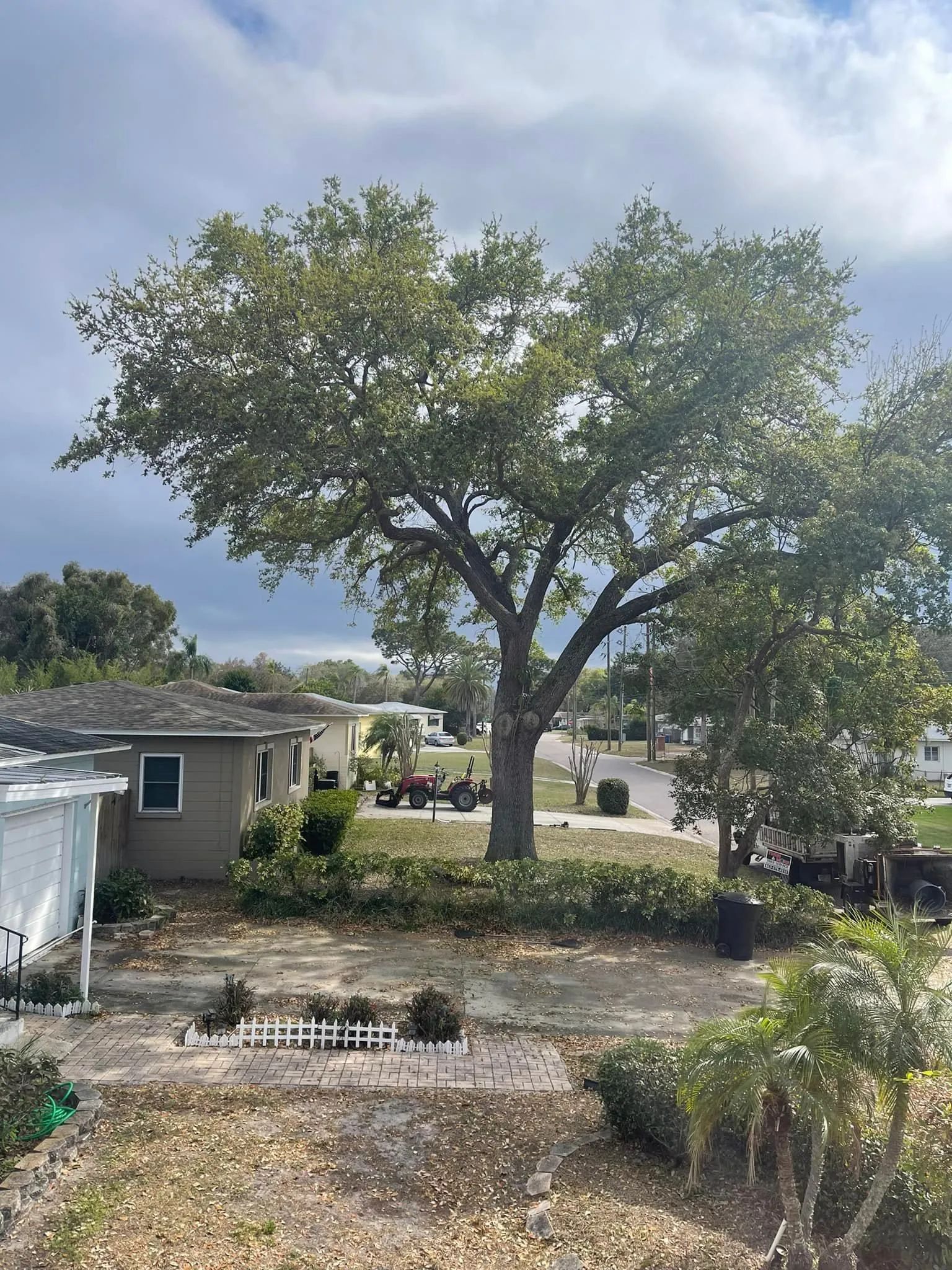
Live oaks put on dense, wide canopies that reach toward a roofline long before anyone notices, and their wood is heavy enough that a falling limb does real damage. Washingtonian and cabbage palms grow straight up past the roofline and drop fronds that snag on service drops and gutters. Add sandy soil that doesn't anchor a root system the way clay does, and a summer thunderstorm with sixty-mile-an-hour gusts, and a tree that was merely close to the house in June can be actively damaging it by September.
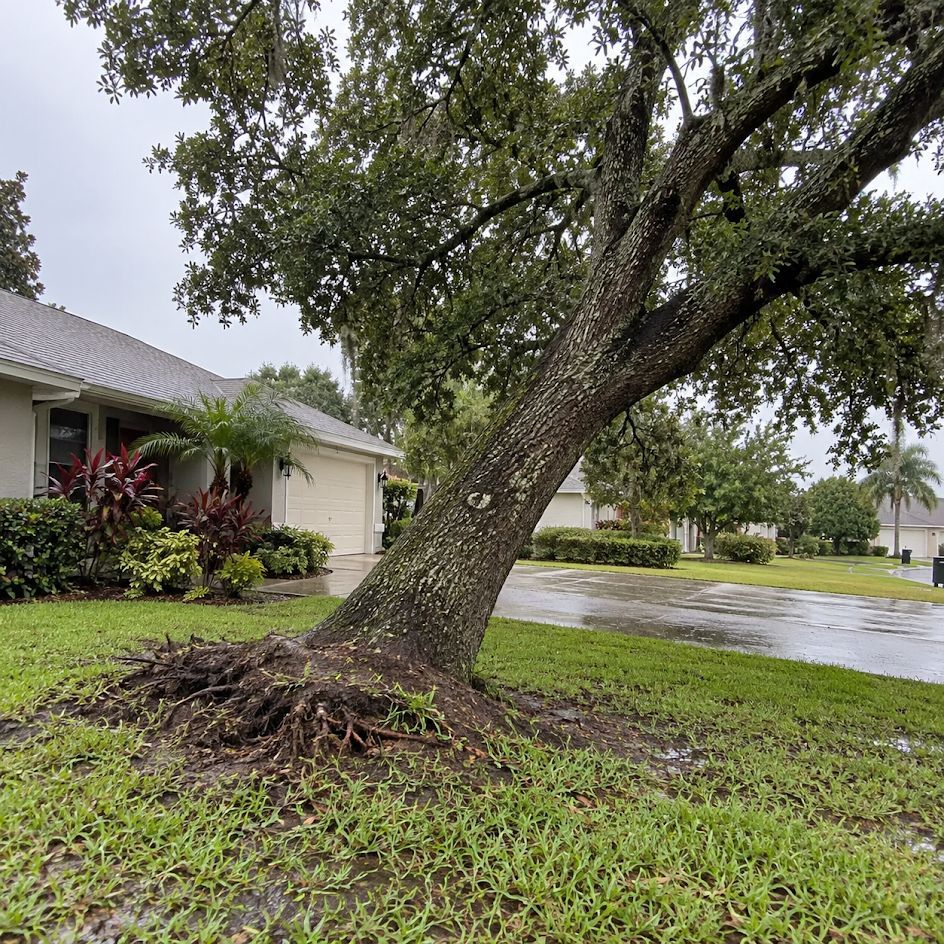
Hurricane season makes the timing worse, not just the wind. Saturated soil loosens root plates, and a tree that was structurally fine in dry conditions can shift measurably after a few days of heavy rain — right as storm winds start testing it.
What Actually Happens On Removal Day
The work looks methodical because it has to be. A crew walks the property first, sizing up the lean, the target structures, and anything overhead — power lines, cable, a neighbor's fence line. That assessment decides whether the job calls for rope rigging, a crane, or both, and whether the utility needs a call before anyone climbs.
Ground crew sets up a controlled drop zone, protects landscaping and hardscape with plywood or mats, and stages the chipper and hauling equipment out of the fall path. The climber or bucket operator works the canopy down piece by piece, communicating with the ground team on every cut. Debris gets processed as it comes down rather than piling up, which keeps the work area clear and keeps the crew from tripping over their own wood.
WARNING: A tree leaning toward a house after storm winds, with visible root heave or a split trunk, should not wait for a routine appointment. Root plate movement can progress fast, and a tree that's still standing at 8 a.m. isn't a guarantee it's standing at noon.
Once the tree is down, the stump usually stays behind unless grinding is part of the job, and the site gets cleared of brush, limbs, and debris before the crew leaves. A clean site isn't cosmetic — leftover branches near a foundation or fence line just become the next problem.
A job like this usually runs longer than people expect, and that's by design. Rigging takes time. Crane setup takes time. Talking through the plan with a homeowner before the first cut takes time too. None of it is padding — it's what keeps a tree that's growing over a roof from becoming a tree that's sitting on top of one.
Trimming First, Removal Later
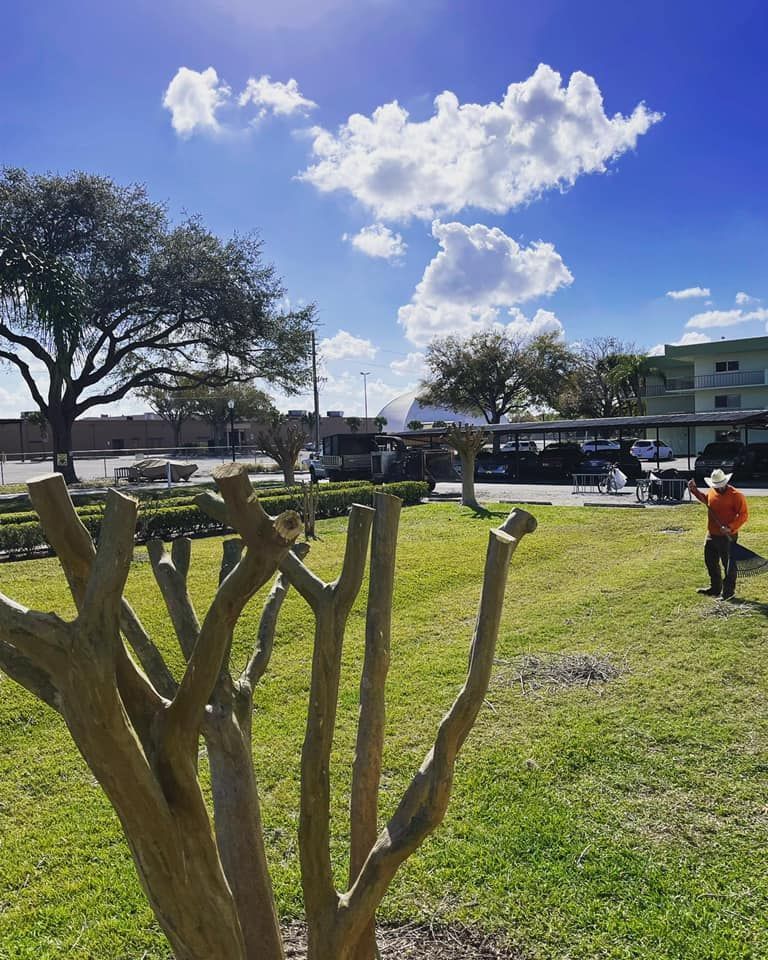
Not every tree crowding a house or a line needs to come out entirely. Sometimes the fix is a hard prune back from the structure — removing the limbs that overhang the roof or reach toward the service drop while leaving the rest of the tree standing. This works when the trunk itself is healthy, well-rooted, and positioned far enough away that regrowth can be managed with routine trimming instead of another full removal down the road.
The call between trimming and full removal usually comes down to structural integrity, not just proximity. A live oak with a sound trunk and a canopy that's simply grown too far can often be pulled back and kept in check. A palm with a soft, punky crown or a live oak with a visible lean and root plate movement is a different situation, and pruning won't fix what's already failing underground.
Frequently Asked Questions
How close does a tree have to be to a house before it needs special handling?
Once a tree's canopy or trunk overlaps the structure, or would land on it if it fell, the job shifts to sectional removal. Crews plan around branches within ten to fifteen feet of a roofline.
Can a tree be removed if it's touching a power line?
Yes, but the line comes first. A crew coordinates with the utility to de-energize or shield the line before any cutting starts. Skipping that coordination is one of the most dangerous mistakes in tree work.
Will removing a tree near my house damage my roof or landscaping?
Not if it's rigged correctly. Sectional dismantling and rope-lowered pieces are designed to keep weight off the structure. Ground crews also protect landscaping with mats or plywood before work begins.
Why does this take more work than removing a tree in an open yard?
Why does this take more work than removing a tree in an open yard?
What are the warning signs that a tree near my house needs removal soon?
Bark splitting along the trunk, a lean that's increased since the last storm, mushroom growth at the base, and canopy dieback facing the house all move this into removal territory.
Do live oaks and palms need different removal approaches near a house?
Somewhat. Live oaks carry heavy, wide limbs needing rigging even at moderate heights, while palms grow tall and narrow, putting fronds and the crown directly over rooflines and service lines.
A Tree That Needs A Plan, Not A Guess
A tree crowding a roofline or tangled near a power line was never going to come down the same way an open-yard tree does, and treating it that way is how homeowners end up with a damaged roof or a much bigger problem. Sectional dismantling, careful rigging, and coordination with the utility when a line is involved all exist for the same reason: to keep a tree's weight and direction fully under control from the first cut to the last piece hauled away.
Trees and More
has spent 10+ years reading that lean, that canopy creep, and that root plate shift for homeowners across Lakeland, FL, where live oaks and palms crowd rooflines and service drops more than most people realize. Knowing when a tree calls for a hard prune instead of
full removal
is part of that same judgment. Catching the warning signs early is usually what keeps a hurricane season from making the decision for you.